About GENESIS
Genesis are the architects of progressive rock's most enduring template, a band that transformed the genre from art-school experiment into stadium spectacle without sacrificing intellectual rigour. From their inception, they operated in the space where classical composition meets rock instrumentation, drawing influence from both the Canterbury Scene's quirky eclecticism and the ambition of early Pink Floyd. Their sound is characterised by intricate time signatures, layered synthesisers, dramatic dynamic shifts, and vocals that move fluidly between vulnerability and operatic grandeur—all built on a foundation of inventive bass and drums that treat rhythm as a compositional element rather than mere timekeeping.
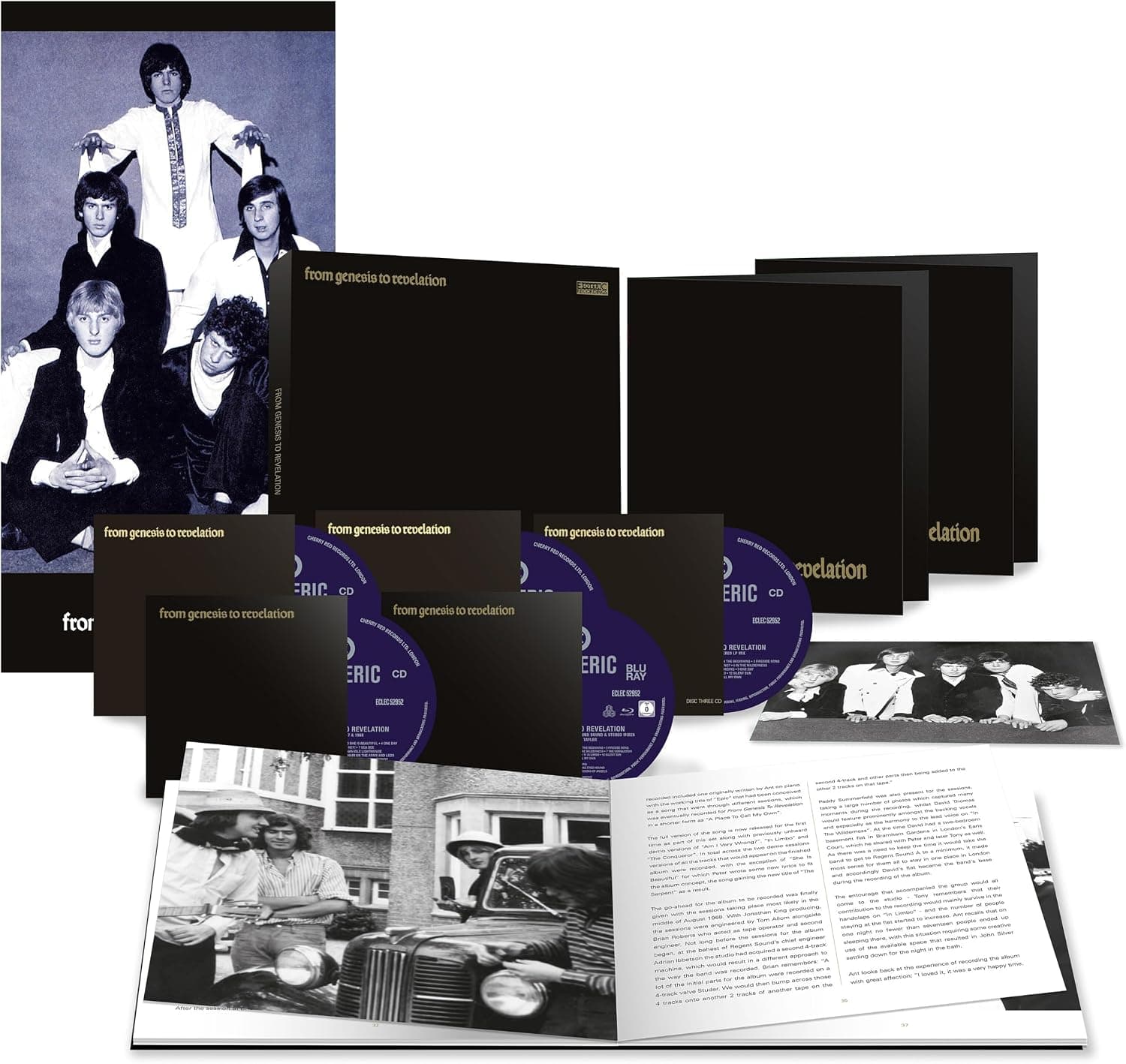
The band's trajectory spans distinct eras, each driven by internal chemistry and external circumstance. Their early work, collected on *From Genesis to Revelation* through 2026 on Cherry Red, captures them as something between the whimsy of Syd Barrett-era Floyd and the proto-metal ambition they'd soon embrace; these recordings document their formative period when Peter Gabriel's theatrical presence and the instrumental precision of Tony Banks, Steve Hackett, and Phil Collins were still finding their distinctive voice. The subsequent decades saw Genesis evolve from cult art-rock heroes into one of rock's most commercially dominant forces, their albums consistently expanding what progressive rock could accommodate—longer suites, more ambitious production, and increasingly complex arrangements that other bands spent years attempting to emulate.
Genesis matter because they solved the problem that kills most progressive bands: how to make technical complexity feel emotionally necessary rather than ostentatious. They created passages of genuine darkness and mystery—songs that unspool across eight or nine minutes and feel longer and shorter simultaneously. Listeners drawn to Jethro Tull's folk-prog hybrids, King Crimson's darker architectures, or Yes's symphonic scope will find in Genesis a band that synthesised those lineages into something unmistakably their own. They're essential listening for anyone trying to understand why progressive rock endures as a living tradition rather than a historical curiosity.